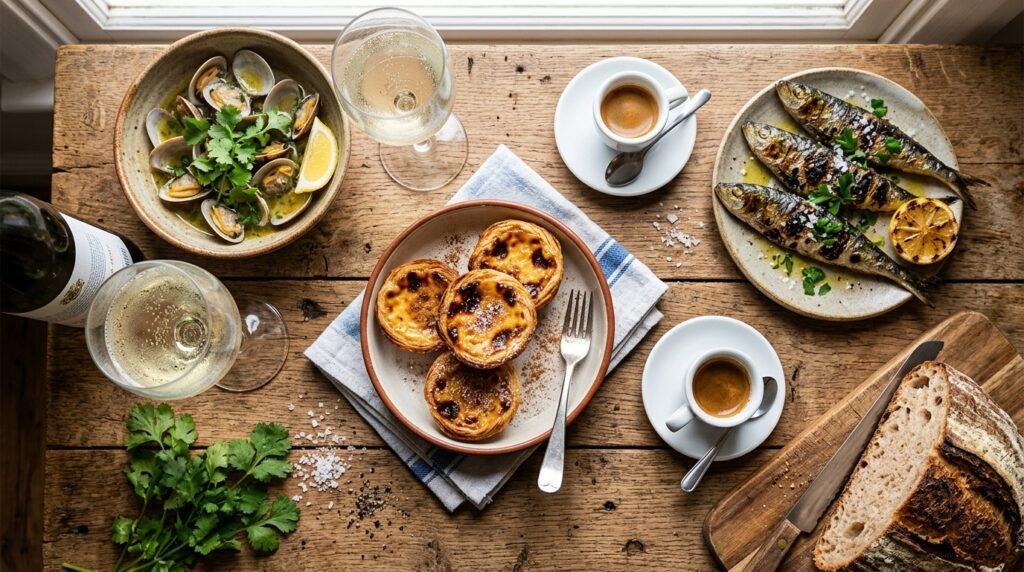
Lisbon’s essential foods are: pastéis de nata, bacalhau in at least one form, amêijoas à Bulhão Pato, a bifana or prego sandwich, and a ginjinha in a chocolate cup near Rossio. National Geographic readers named Lisbon the world’s top foodie hotspot — and once you’ve had a warm custard tart straight from the oven at Pastéis de Belém, open since 1837, you’ll understand why.
What Is Lisbon’s Food Famous For?
Lisbon’s food identity is built on two things: the sea and the bacalhau. Portugal has over 800 kilometres of Atlantic coastline, and Lisbon sits at the mouth of the Tagus River — fresh seafood has been the backbone of the city’s cuisine for centuries. The bacalhau (dried and salted cod) is the other pillar, with Portuguese cooks claiming more than 365 ways to prepare it — one for every day of the year.
Beyond these two anchors, Lisbon’s food scene in 2026 balances centuries-old traditions with modern creativity. Family-run tascas serving recipes passed down through generations sit alongside innovative restaurants helmed by Michelin-starred chefs. The city has 46 Michelin-starred restaurants within its greater area. Whether you’re seeking the best seafood feast of your life or a simple custard tart with your morning coffee, Lisbon delivers both without asking you to choose.
This guide covers everything you should eat, where to eat it, and — equally importantly — the traps to avoid.
Pastel de Nata — The One Thing You Cannot Leave Without Eating
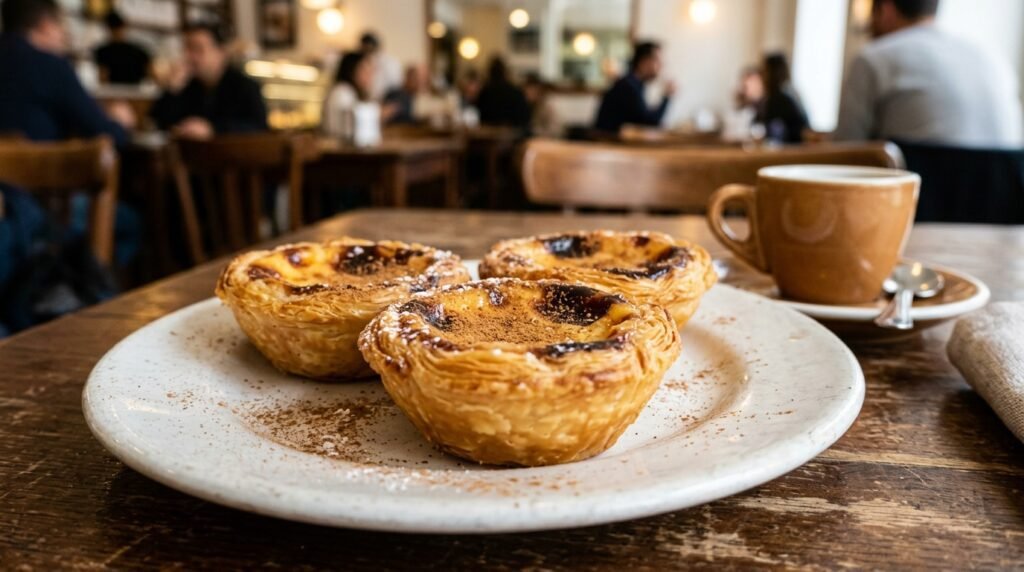
The pastel de nata is Lisbon’s most iconic food and deserves to be tried more than once during your stay. A small, fluted pastry case filled with a warm, lightly caramelised egg custard — slightly crispy at the edges, creamy at the centre — it is eaten standing at a café counter, often sprinkled with cinnamon, always with a small espresso alongside.
The debate every visitor eventually encounters: Pastéis de Belém or Manteigaria?
Pastéis de Belém in the Belém neighbourhood has been making the original recipe since 1837. The recipe is a closely guarded secret known only to three pastry chefs at any given time. The tarts here are larger, slightly crisper, and come dusted with cinnamon and icing sugar on a small plate. The queue outside is long but moves quickly. The experience of eating the original in the original bakery, surrounded by blue-tiled walls and local families, is irreplaceable. One tart costs approximately €1.50.
Manteigaria in Chiado is the modern challenger — an open kitchen where you can watch the tarts being made and pulled from the oven continuously throughout the day. They are smaller, more delicate, with a darker caramelised top. Many visitors prefer them. The queue here also moves quickly and the location in the heart of Chiado makes it far more convenient if you’re not heading to Belém.
💡 Sia says: “I have eaten pastéis de nata across every neighbourhood in Lisbon over eight years. My honest answer is: eat Pastéis de Belém on the morning you visit Belém Tower, and Manteigaria on every other morning. They are genuinely different tarts and both earn their reputation.”
Our recommendation: Try both. One tart each, back to back. You’ll form an opinion quickly.
Bacalhau — Portugal’s Most Complex Ingredient
Bacalhau is dried and salted cod, and it is the foundation of Portuguese cooking in a way that no single ingredient defines any other European cuisine. The claim that Portuguese cooks have 365 bacalhau recipes — one for every day of the year — is likely an exaggeration. The reality is well over 1,000.
For first-time visitors, three preparations are the essential starting points:
Bacalhau à Brás — shredded salted cod cooked with onions, straw potatoes, and scrambled eggs, finished with black olives and flat-leaf parsley. This is thought to have originated in Bairro Alto and is the most beginner-friendly bacalhau dish — creamy, savoury, and deeply comforting. Order it at almost any traditional tasca and you will not be disappointed.
Bacalhau com Natas — salt cod baked in layers with cream and thinly sliced potatoes, finished golden on top. Richer and heavier than Bacalhau à Brás, it is a cold-weather dish that appears frequently on lunch menus from October through April.
Pastéis de Bacalhau — small, oval-shaped salt cod fritters made with potato and egg, fried until golden. These are Lisbon’s most common street snack and the easiest entry point for anyone cautious about bacalhau. They appear at tascas, markets, and casual restaurants at all hours. At approximately €1.50–2 each, they are one of the best-value snacks in the city.
Where to eat bacalhau: Look for tascas that serve daily specials written on a chalkboard — these are usually whatever the kitchen has freshest that day. The chalkboard indicates a serious kitchen. A laminated tourist menu indicates the opposite.
Amêijoas à Bulhão Pato — Lisbon’s Greatest Starter
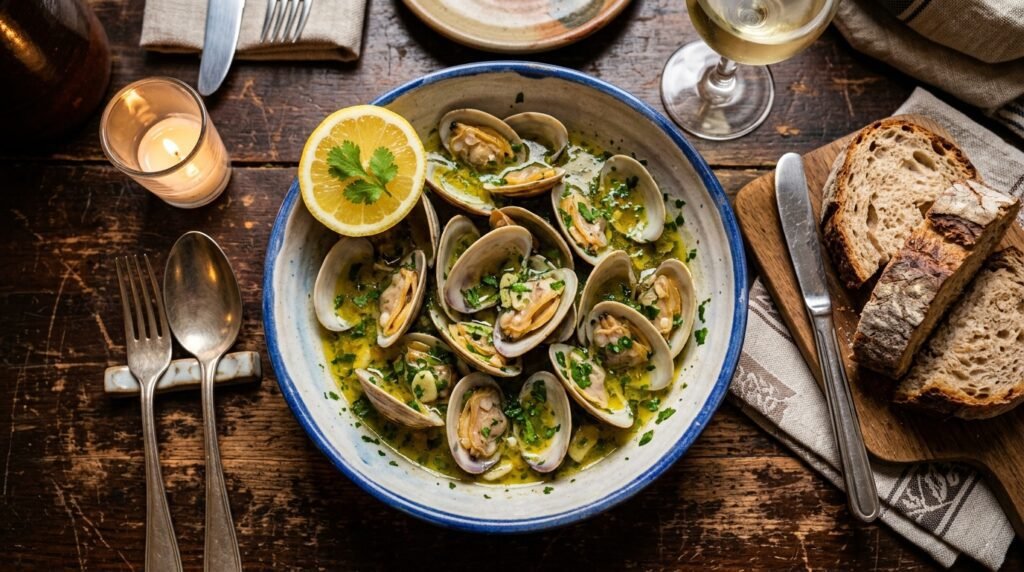
Named after the 19th-century Lisbon poet and renowned foodie Raimundo Bulhão Pato, amêijoas à Bulhão Pato is a dish of clams sautéed in olive oil, white wine, garlic, lemon juice, and fresh coriander. The clams open in the pan as the liquid reduces, creating a fragrant, intensely flavourful broth that demands bread to mop up every last drop.
It is one of the most perfectly calibrated dishes in Portuguese cuisine — simple enough to make in eight minutes, complex enough that restaurants spend years perfecting their version. Only the clam quality and the coriander freshness vary meaningfully between kitchens.
Order it as a starter at any seafood restaurant in Lisbon. The bread they bring alongside is worth whatever the couvert charge costs. This is one of the rare occasions where eating it is worth the fee.
Price range: €12–18 for a generous starter portion, enough for two to share.
Bifana and Prego — Lisbon’s Great Street Sandwiches
Portuguese street food is anchored by two sandwiches that the rest of the world has not yet discovered, and this is an advantage you should use immediately.
The bifana is a pork sandwich — thin slices of pork marinated in white wine, garlic, and paprika, then braised until tender and piled into a crusty bread roll called a papo-seco. It is served plain or with mustard, eaten standing at a counter, and costs approximately €2–3.50. The best bifanas in Lisbon are found at As Bifanas do Afonso near the Sé Cathedral — no tables, no menus, a permanent queue of locals on their lunch break, and sandwiches that disappear in four bites. Go before 12:30pm or expect to wait.
The prego is the beef equivalent — thin slices of tender beef, often marinated in garlic, served in the same crusty roll and frequently topped with a fried egg. It is Portuguese fast food at its finest: filling, flavourful, and about €4–6 depending on where you order it. Prego da Peixaria at Time Out Market is widely considered the best version in Lisbon in 2026.
💡 Ana Costa says: “In eight years in Lisbon, I ate more bifanas than I can count. The ones at As Bifanas do Afonso are not the most glamorous — there’s barely room to stand — but the pork is perfectly seasoned and the roll is always fresh. That queue of locals tells you everything.”
Petiscos — Portuguese Tapas, Done Better
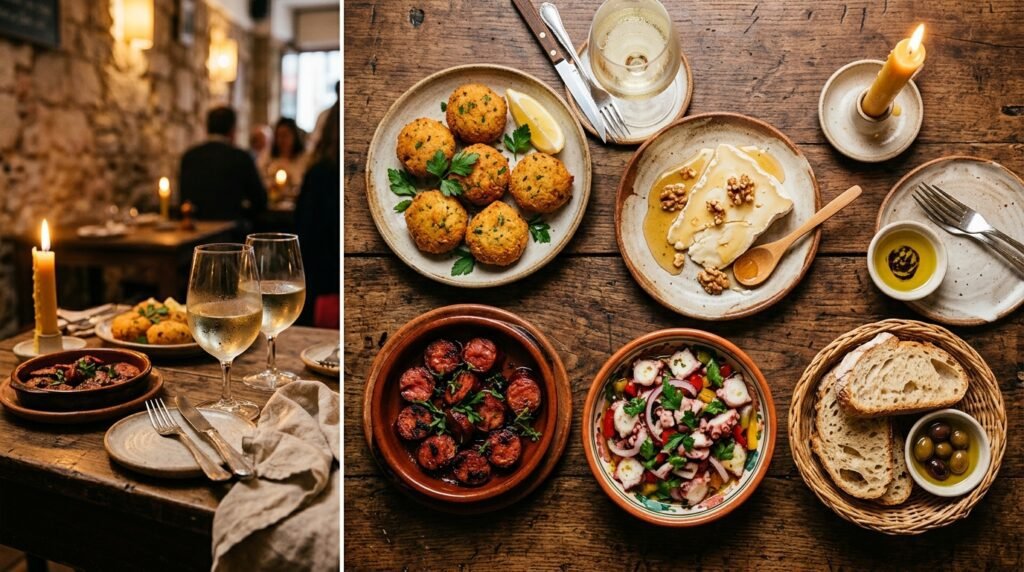
Petiscos are Portugal’s answer to tapas: small plates meant to be shared, ordered in quantity, and eaten slowly over an extended evening. They are Lisbon’s most social food format and the one most rewarding for visitors who give it the time it deserves.
A typical petiscos spread might include: salt cod fritters, a small plate of Alentejo pork with clams, Serra da Estrela cheese with honey, fried chouriço, smoked mackerel with pickled vegetables, octopus salad, and bread with local olive oil. Each dish costs €4–10; a full table of six to eight petiscos between two people constitutes a complete and deeply satisfying dinner.
Where to eat petiscos in Lisbon:
Taberna da Rua das Flores in Chiado — A small wine bar with a short, precise menu that changes regularly. The bacalhau preparations are outstanding, the natural wine list is one of the best in Chiado, and the room is intimate enough that a table for two feels like a private dining experience. Book ahead.
Tasca do Chico in Alfama — Only 20 seats and live fado on Wednesday and Saturday nights. The food is traditional, honest, and carefully made. Getting a table here requires booking weeks in advance in summer, but the experience justifies every effort.
Taberna Sal Grosso in São Bento — Modern Portuguese sharing plates at honest prices. Wide-ranging menu, casual atmosphere, and a kitchen that clearly enjoys what it’s doing.
Grilled Sardines — The Most Seasonal Dish in Lisbon
Fresh grilled sardines are one of the great seasonal pleasures of Lisbon, available at their best from June through September when the Atlantic sardine runs closest to the Portuguese coast. During the Festas de Lisboa in June — the city’s most important festival, celebrating Saint Anthony — grilled sardines are eaten on virtually every street corner in the city, cooked on outdoor charcoal grills and served on a piece of bread.
A whole plate of four fresh sardines, grilled over charcoal and served with boiled potatoes, roasted peppers, and a drizzle of olive oil, costs approximately €8–14 depending on the restaurant. In June, you can find them cheaper still from street stalls during the festival season.
Important: fresh sardines are entirely different from tinned sardines. The flesh is fatty, rich, and intensely flavourful — nothing like the preserved version. If you have previously avoided sardines based on the tin, reconsider immediately.
Outside of summer, sardines are replaced by other fresh seasonal fish — the menu changes monthly based on what the Atlantic is providing.
What to Drink in Lisbon
Vinho Verde — Portugal’s most distinctive white wine: light, slightly sparkling, low in alcohol, and bone dry. Produced in the Minho region north of Porto, it is the default wine order for seafood throughout Lisbon. A glass costs €3–5; a bottle €12–18 at a tasca.
Alentejo reds — For meat and heavier dishes, the wines of the Alentejo interior — full-bodied, warm-climate reds with good structure — are the right choice. Herdade do Esporão and Quinta do Crasto are reliable names on most restaurant lists.
Bica — The Lisbon word for espresso. Strong, short, and consumed standing at a counter. Costs €0.80–1.50 depending on the neighbourhood. Order a galão (espresso with foamed milk in a tall glass) if you want something closer to a flat white.
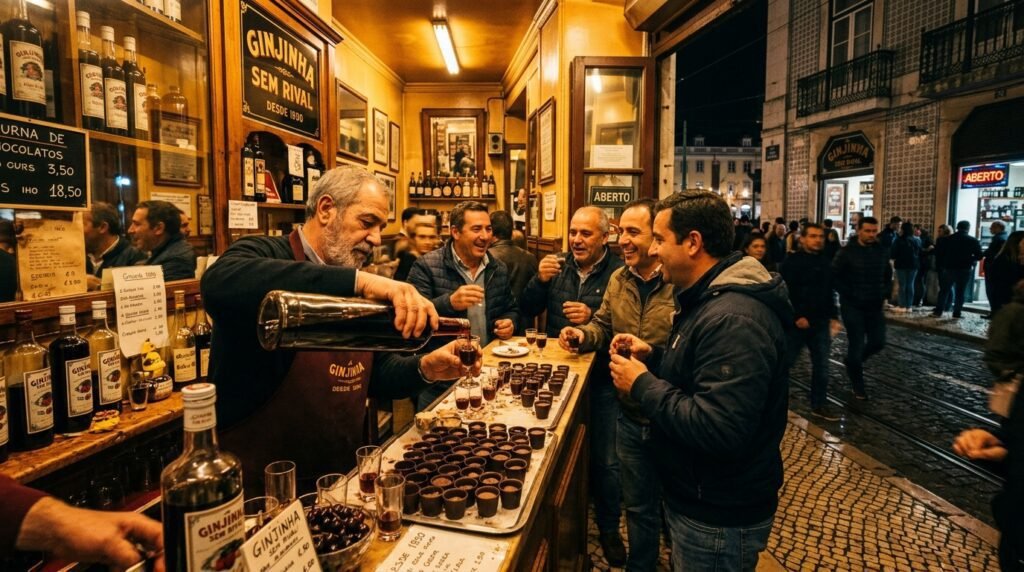
Ginjinha — The essential Lisbon after-dinner ritual. Ginjinha is a sweet, sour cherry liqueur made by infusing ginja berries in aguardente (Portuguese brandy). It is served in small chocolate cups at A Ginjinha near Rossio Square — a tiny bar that has been pouring the same recipe since 1840. The ritual is: order one ginja, receive it in a chocolate cup, eat the cherry at the bottom, drink the liqueur, eat the cup. The entire experience costs €1.50 and takes approximately 90 seconds. Do it twice.
Is Time Out Market Worth Visiting?
The Time Out Market Lisbon at Cais do Sodré opened in 2014 and has become one of the most visited food destinations in the city — a curated food hall bringing together some of Lisbon’s best chefs and restaurants under one roof. It is touristy. It is also genuinely good.
The quality control is real — Time Out editors vet every vendor. Among the best stalls: Manteigaria (pastéis de nata), Prego da Peixaria (the best prego sandwich in Lisbon), and Marisqueira Azul (fresh seafood).
The catch: the midday hour between 12:30 and 2pm is genuinely chaotic and dominated by tour groups. Go at 11am for a late breakfast, or after 2:30pm when the lunch rush clears.
Verdict: Worth one visit, ideally for lunch on a day when you’re exploring Cais do Sodré and Chiado. Do not base your entire Lisbon food experience here — the best tascas and wine bars are better than anything the market offers, and they’re cheaper.
How to Eat Like a Local in Lisbon
Go to lunch, not dinner, at tascas. The best traditional tascas serve their finest dishes at lunch — the prato do dia (daily special) is whatever the kitchen is most proud of that day. A full prato do dia with soup, main course, bread, and a glass of house wine costs €9–13. The same restaurant at dinner costs 30% more and the atmosphere is less local.
Sit at the counter when you can. Lisbon’s counter culture — eating standing at a bar, or on a high stool — is where the most honest food and quickest service live. The bifana at Afonso, the pastel de nata at Manteigaria, the ginjinha at Rossio — all eaten standing, all better for it.
Avoid restaurants with photographs on the menu. This is the universal rule. A laminated menu with photographs outside on a Alfama tourist street means tourist prices and kitchen shortcuts. Walk one street back and the quality changes completely.
The bread trap, again. Bread, olives, and small appetisers arriving at your table without being ordered are not complimentary. They appear on your bill. Say “não, obrigado” if you don’t want them. Say nothing and eat them if you do — just know you’re paying.
Frequently Asked Questions — What to Eat in Lisbon
What is the most famous food in Lisbon? The pastel de nata custard tart is Lisbon’s most iconic food — a warm, lightly caramelised egg custard in a fluted pastry case, eaten with a small espresso. Bacalhau (salt cod) is the most deeply embedded ingredient in the city’s cooking, prepared in over 365 ways across Lisbon’s restaurants and tascas.
Where is the best pastel de nata in Lisbon? Pastéis de Belém, open since 1837, is the original and many argue the best — larger, crispier, and eaten in a beautiful 18th-century tiled room. Manteigaria in Chiado offers a more delicate, freshly baked version with shorter queues. Both are worth trying on the same visit.
What is a bifana? A bifana is a traditional Portuguese pork sandwich — thin slices of pork braised in white wine, garlic, and paprika, served in a crusty papo-seco roll. It costs €2–3.50 and is one of Lisbon’s best street food options. As Bifanas do Afonso near the Sé Cathedral is the most recommended address.
Is ginjinha worth trying in Lisbon? Absolutely. Ginjinha is a sweet sour cherry liqueur served in a small chocolate cup at A Ginjinha near Rossio Square — a bar that has been open since 1840. The experience costs €1.50, takes two minutes, and is one of the most characteristically Lisbon things you can do.
What should vegetarians eat in Lisbon? Portuguese cuisine is heavily seafood and meat focused, but vegetarian options are growing. Look for dishes featuring Serra da Estrela cheese, migas (bread-based side dishes), and vegetable-based açorda (bread soup). Modern tascas in Chiado and Príncipe Real offer the most vegetarian-friendly menus.
When are sardines available in Lisbon? Fresh grilled sardines are at their best from June through September. The peak is the Festas de Lisboa in June, when sardines are grilled on street corners across the city during the Saint Anthony festival. Outside these months, other fresh seasonal fish replace them on restaurant menus.
Plan Your Lisbon Food Trip
Tell our AI travel planner your food preferences, dietary requirements, and travel dates — and we’ll build a personalised Lisbon itinerary with restaurant recommendations matched to your taste.
Explore more Lisbon and Portugal:
- Lisbon Travel Guide 2026 →
- Best Restaurants in Lisbon for Couples →
- Lisbon vs Porto — Which City Should You Visit? →
- 7 Days in Portugal — Complete Itinerary →
Last updated: June 2026. Restaurant details and prices based on current 2026 listings. Michelin star count sourced from Michelin Guide Portugal 2026. Always verify current opening hours and reservations directly with restaurants before visiting.