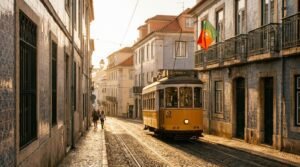
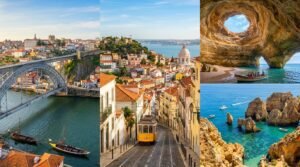
Three days in Porto is the sweet spot. Enough time to walk the UNESCO-listed Ribeira waterfront, climb Clérigos Tower, taste port wine in the historic lodges across the river, eat a proper francesinha, and still make it out to the Douro Valley vineyards on day three — the part that turns a good Porto trip into an unforgettable one.
Porto is not Lisbon. It’s smaller, grittier, and has no interest in impressing you with grand boulevards. What it has instead is one of the most atmospheric old towns in Europe, a food identity that locals will argue about passionately over a second glass of port, and the Douro River running through everything — connecting the medieval city on one bank to the wine lodges of Vila Nova de Gaia on the other. Locals will tell you it’s Portugal’s real soul. Three days gives you enough time to start believing them.
Here is exactly how to spend those three days.
Day 1: The Historic Heart of Porto
Morning — São Bento Station and Livraria Lello
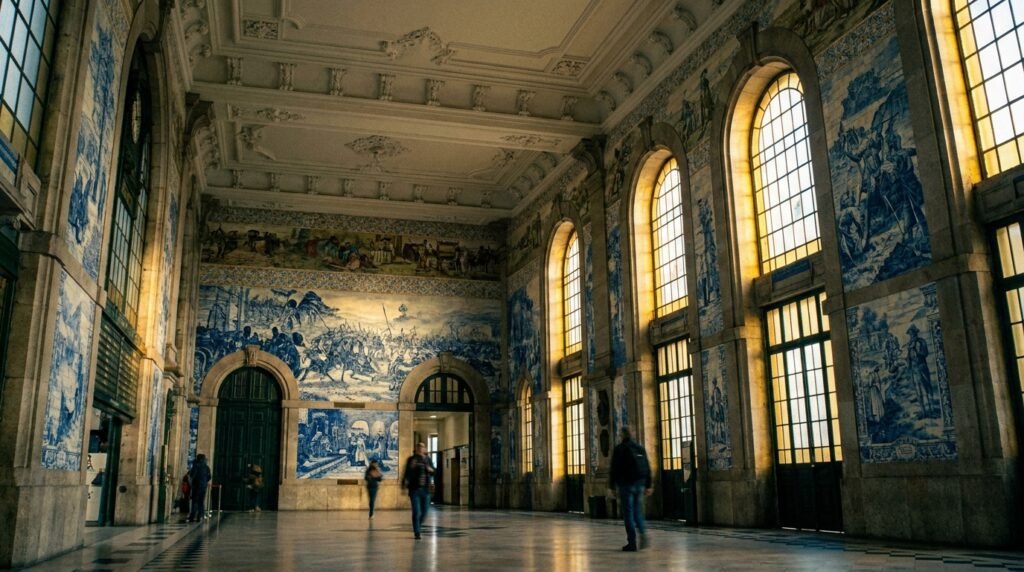
Start at São Bento Station, and not because you’re catching a train. The station’s entrance hall is covered floor to ceiling in approximately 20,000 hand-painted blue-and-white azulejo tiles depicting scenes from Portuguese history — battles, royal processions, rural village life. It took eleven years to complete and was finished in 1930. Walk in, stand in the centre of the hall, and look up. It’s one of the most beautiful interiors in Portugal and it costs nothing to enter.
From São Bento, it’s a five-minute walk to Livraria Lello on Rua das Carmelitas. Opened in 1906 and classified as a Portuguese National Monument in February 2026, it is consistently listed among the most beautiful bookshops in the world — and it earns the title. The neo-Gothic interior centres on a sweeping red staircase, ornately carved wooden shelves rising to a stained glass ceiling, and an atmosphere that genuinely stops people in their tracks.
Important: Buy your entry ticket online before you visit. Livraria Lello implemented timed entry tickets to manage the queues that were forming outside for hours. Buying online is cheaper, skips the line entirely, and the ticket cost is redeemable against any book purchase in the shop. Without a pre-booked ticket, expect to wait 45–90 minutes in peak season.
💡 Local Tip: Avoid the resellers outside selling “combo tickets.” Buy directly from the Livraria Lello website only. The reseller markups are significant and unnecessary.
Mid-Morning — Clérigos Tower
A short walk from Lello, the Torre dos Clérigos is Porto’s most recognisable skyline feature — a 75-metre baroque bell tower that has overlooked the city since 1763. The 225 steps to the top deliver the best 360-degree views in Porto: the old town below, the river and bridge, the port lodges across the water in Gaia, and on clear days the Atlantic coastline to the west.
Book your slot online. It sells out quickly in the mornings, which are the best time for photography. Allow around 45 minutes including the climb and the views.
Afternoon — Palácio da Bolsa and the Ribeira
Walk downhill toward the river and stop at the Palácio da Bolsa — Porto’s 19th-century stock exchange building, built by the Commercial Association to attract foreign investment. The building is visited by guided tour only, and it’s worth every minute for the Salão Árabe (Arabian Room) alone: an extraordinary Moorish revival hall that took eighteen years to complete, its walls and ceilings covered in intricate gold-traced plasterwork and geometric patterns designed to impress visiting trade delegations from around the world. It still does.
Next door, Igreja de São Francisco is one of Portugal’s most opulent church interiors — an almost overwhelming amount of gilded Baroque wooden decoration covering every surface. Sombre Gothic exterior, jaw-dropping golden interior. The contrast is the point.
By early afternoon, follow the lanes downhill to the Ribeira waterfront. The waterfront itself is tourist-oriented, but the cobbled streets running immediately behind it hide some of Porto’s best small restaurants, wine bars, and pastry shops. Sit somewhere with a river view, order a glass of white Vinho Verde, and watch the rabelo boats on the Douro.
Evening — Dom Luís I Bridge and First Francesinha
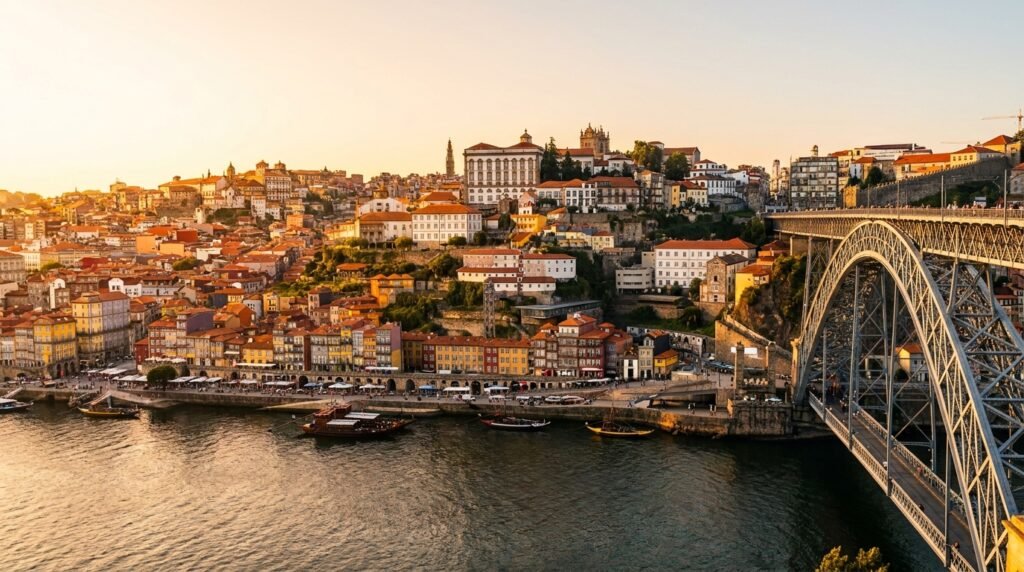
As the light softens in the late afternoon, walk across the Dom Luís I Bridge. Designed by Théophile Seyrig — a collaborator of Gustave Eiffel — and completed in 1886, the double-deck iron bridge spans 172 metres across the Douro at 45 metres above the river. Walk the upper deck for the finest views back over Porto’s hillside silhouette. The sight of the city from the middle of the bridge at golden hour is one of those moments that stays with you.
Then comes the most important meal of your Porto trip: your first francesinha.
The francesinha is Porto’s signature dish — a thick sandwich stuffed with cured meats, steak, and linguiça sausage, blanketed in melted cheese, then drowned in a hot, spiced tomato-and-beer sauce. It comes with a generous pile of fries on the side. It is rich, heavy, completely excessive, and deeply satisfying. Porto locals will die defending their favourite version.
For a reliable, genuinely excellent francesinha on Day 1, head to Francesinha Café in the Bonfim neighbourhood. Chef Fernando Cardoso sources his sausages from the famous Leandro charcuterie and runs a kitchen that takes the city’s defining dish seriously. It’s a small, golden-lit space — reserve ahead if visiting at dinner time.
Day 2: Port Wine, River, and Local Neighbourhoods
Morning — Vila Nova de Gaia Port Wine Lodges
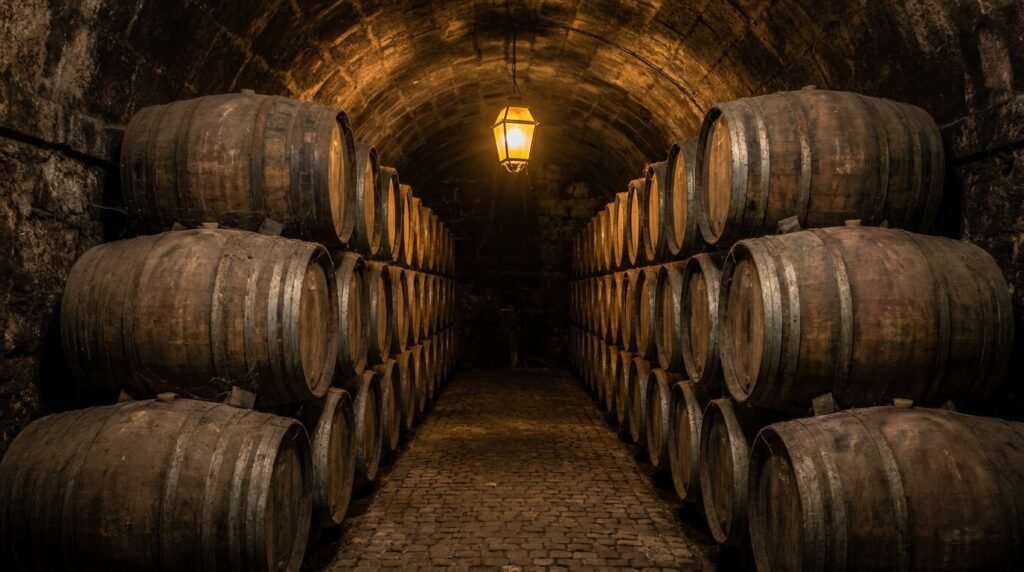
Cross the Dom Luís I Bridge to the south bank and spend the morning in Vila Nova de Gaia, where Porto’s famous port wine has been aged and bottled for centuries. The port lodges — long, low warehouses climbing the hillside above the river — belong to some of the most famous names in wine: Graham’s (founded 1820), Sandeman (founded 1790), Taylor’s, Calem, and Ramos Pinto among them.
Each lodge offers guided cellar tours with tastings for approximately €15–€25 per person. The tour walks you through the ageing warehouses — vast, cool spaces stacked with barrels — explains the production process, and finishes with two or three glasses of different port styles. Even if you’ve never been particularly interested in port wine, the tours are genuinely interesting and the tasting experience is a highlight.
Our recommendation is Taylor’s. The tour is well-organised, the warehouses are among the most atmospheric in Gaia, and after the tasting you can sit in their terrace garden overlooking the river and the Dom Luís I Bridge with a glass of tawny. It’s the kind of view that makes you order one more glass than planned. Book in advance, especially for weekend mornings.
Mid-Morning — Teleférico de Gaia
After the tasting, take a few minutes for the Teleférico de Gaia cable car, which connects the upper lodge area to the riverside promenade below. The views on the way down over the Douro, the bridge, and the Porto skyline are outstanding — well worth the few euros the ride costs.
Afternoon — Mercado do Bolhão and Local Neighbourhoods
Back across the river, lunch at Mercado do Bolhão — Porto’s beautifully renovated traditional market, where traders sell fresh produce, local cheeses, smoked meats, shellfish, and regional specialities. The renovation preserved the original 1914 iron structure and added a vibrant food hall atmosphere. It is busiest in the morning but excellent for lunch. Pick up cheese, olives, and local charcuterie for a market-style lunch, or sit at one of the small food stalls inside.
After lunch, explore one of Porto’s genuinely local neighbourhoods that most day-trippers never reach:
Bonfim — An artsy, slightly bohemian area east of the historic centre, full of independent cafés, studios, and the kind of neighbourhood wine bars where locals actually eat. No tourist restaurants, no souvenir shops.
Cedofeita — Elegant and residential, with a strong independent shop and gallery scene along Rua Miguel Bombarda, which transforms into an open gallery street during periodic art events.
Jardins do Palácio de Cristal — A beautiful terraced garden complex with peacocks wandering freely and views across the Douro valley below. Free to enter, genuinely peaceful, and one of Porto’s most underrated spots.
Evening — Foz do Douro
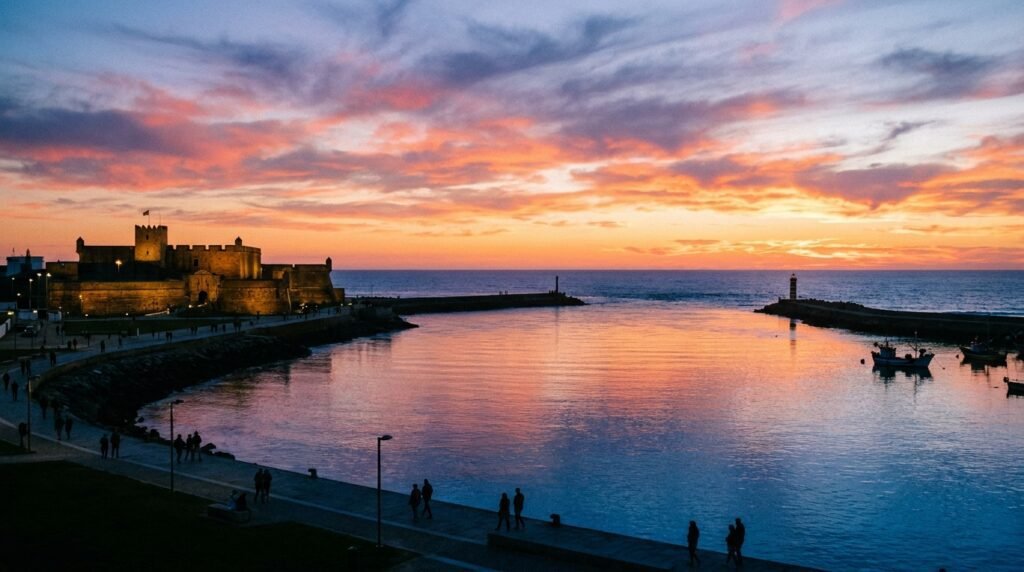
Take a tram or Uber west to Foz do Douro, where the Douro River finally meets the Atlantic Ocean. The seafront here is a world away from the tourist intensity of the Ribeira — wide ocean promenades, local families out for an evening walk, seafood restaurants where the catch is genuinely fresh. Watch the sun drop into the Atlantic and have dinner at one of the Foz seafood restaurants. Grilled sardines in summer, bacalhau in all seasons.
Day 3: Douro Valley — The Day That Makes the Trip
This is the day that separates people who visited Porto from people who understood it.
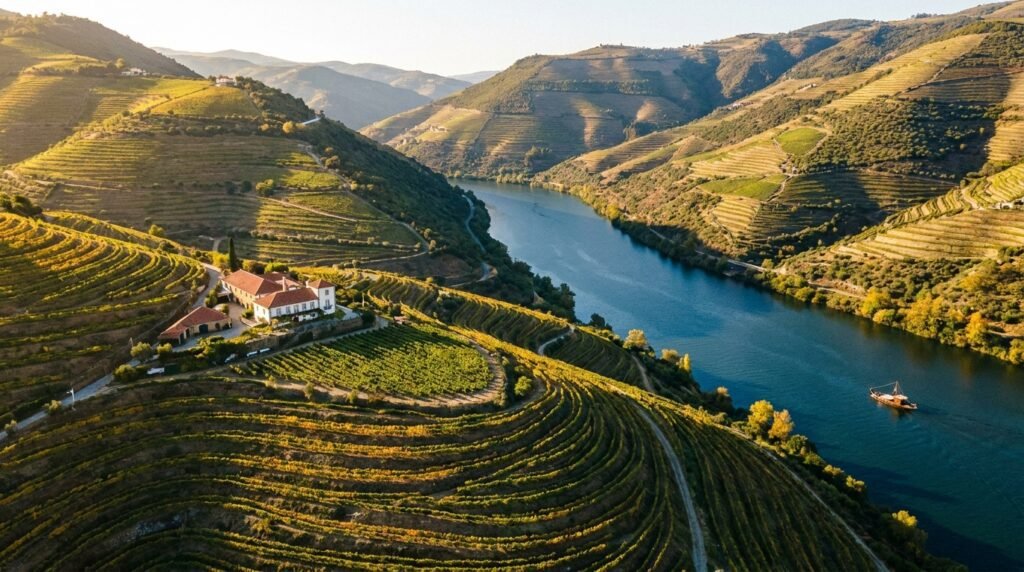
The Douro Valley begins approximately 80 kilometres east of Porto, cutting through terraced vineyards climbing impossibly steep schist hillsides — landscapes so dramatic they were inscribed as a UNESCO World Heritage Site in 2001. This is where port wine comes from, where some of the finest table wines in Europe are produced, and where the scale and beauty of the Portuguese interior become real.
The main production area around Pinhão and Régua is reachable in roughly 90 minutes by car or 2.5 hours from São Bento Station by the scenic Douro train line — one of the most beautiful train journeys in Europe in its own right, following the river through increasingly dramatic gorges as you head east.
For a first visit, a guided day tour from Porto is the right call. The logistics of the Douro — which quintas to visit, how to combine wine tastings with a river cruise, where to have lunch — are genuinely complex without local knowledge, and a good guide adds context that makes the experience three times richer. Full-day guided tours typically include:
- Transport from Porto and back
- Two or three quinta (winery estate) visits with tastings of both Douro DOC still wines and port
- A traditional lunch at a quinta or local restaurant
- A Douro River cruise through the terraced vineyard landscape
- Return to Porto by early evening
The combination of terraced vineyard scenery, sitting on the river, and eating slow-roasted meat with local wine in an old quinta — it’s the kind of day that people fly back to Portugal to repeat.
💡 PlacesToday Tip: If you’re travelling as a couple or small group, a private Douro Valley tour gives you flexibility to linger longer at the quintas you love and skip the ones that don’t interest you. For solo travellers or larger groups, small-group shared tours offer excellent value and the bonus of meeting other travellers.
👉 [Browse Douro Valley day tours from Porto on GetYourGuide →]
Practical Tips for 3 Days in Porto
Getting Around Porto is very walkable in the historic centre, but the hills are real — steep climbs between the Ribeira and upper city are part of the experience. Buy an Andante card for the metro and buses — it covers all public transport and is far cheaper than buying individual tickets. The historic trams (especially Tram 1 to Foz) are scenic but slow; use them for the experience rather than efficiency.
Livraria Lello and Clérigos Tower: Book both online before you arrive. They sell out in the mornings during peak season and neither is worth missing for the sake of a few minutes of advance planning.
Port wine tours in Gaia: Book your preferred lodge 24–48 hours ahead, especially Taylor’s and Graham’s. Weekend morning slots are the first to go.
Douro Valley tours: Book at least 2–3 days in advance. The best small-group tours fill up quickly in summer.
Where to Stay The Ribeira and Aliados area suits first-timers who want everything within walking distance. For a more local experience, look at Bonfim — quieter, more authentic, and 10–15 minutes from the main sights by foot or metro.
Budget Porto is one of Europe’s most affordable cities for quality travel. A satisfying lunch at a local tasca costs €8–€12 per person. A port wine tasting at a major lodge runs €15–€25. Budget €60–€80 per person per day for accommodation, food, tastings, and transport — more for the Douro Valley day trip.
Frequently Asked Questions About Porto
Is 3 days enough for Porto? Three days covers the essential Porto experience comfortably — the historic centre, Vila Nova de Gaia, and a Douro Valley day trip. If you have a fourth day, use it for Foz, Matosinhos (Porto’s seafood neighbourhood), or a slower second day in Gaia.
What is a francesinha and where should I eat one? A francesinha is Porto’s signature dish — a meat-stuffed sandwich smothered in melted cheese and a spiced tomato-beer sauce, served with fries. Francesinha Café in Bonfim and Cervejaria Brasão are the most consistently recommended spots by locals.
Do I need to book Livraria Lello tickets in advance? Yes. Always book online before visiting. Walk-up queues regularly reach 90 minutes in summer. The ticket is redeemable against a book purchase inside the shop.
Is Porto worth visiting without doing a port wine tour? Port wine is woven into Porto’s identity at every level — the lodges, the history, the river, the landscape. Even if you don’t drink much, a cellar tour in Vila Nova de Gaia is worth doing once for the context and atmosphere alone.
What is the best day trip from Porto? The Douro Valley is the standout choice — genuinely spectacular, and only accessible from Porto. Guimarães (Portugal’s birthplace, 45 minutes by train) is an excellent alternative for those more interested in medieval history.
When is the best time to visit Porto? May, June, September, and October are ideal — warm without the peak summer heat, smaller crowds than July and August, and the Douro Valley is particularly beautiful in the September harvest season.
Plan Your Porto Trip
Tell our AI travel planner your dates, group size, and what matters most — wine, history, food, or all three — and we’ll build a personalised Porto itinerary in minutes.
👉 [Start planning my Porto trip →]
Explore more Portugal:
- [Lisbon Travel Guide 2026 →]
- [Sintra Day Trip from Lisbon →]
- [Algarve Travel Guide 2026 →]
- [Is Portugal Safe in 2026? →]
Last updated: June 2026. Port wine lodge tour prices and train times confirmed from lodge websites and CP-Comboios de Portugal. Always check official sources before travel.