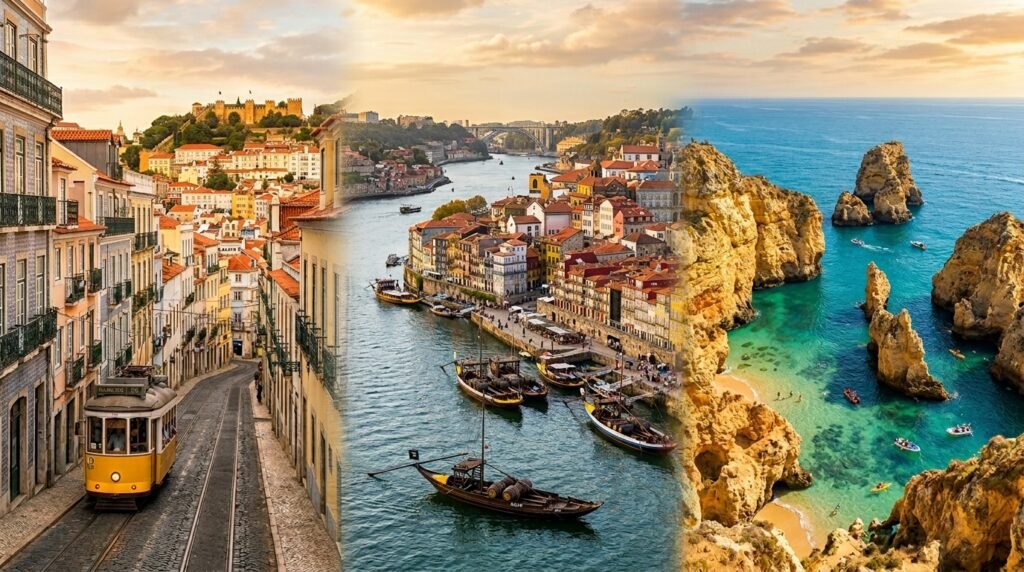
Seven days is the perfect amount of time for a first visit to Portugal. The ideal route covers three nights in Lisbon with a Sintra day trip, two nights in Porto including a port wine afternoon in Vila Nova de Gaia, and two nights in the Algarve. Train connections handle everything — no car needed until the south.
Is 7 Days Enough for Portugal?
Yes — seven days is enough for a genuinely satisfying first visit to Portugal, provided you make one important decision before you book anything: choose two or three regions and commit to them fully, rather than attempting to skim four or five.
The single biggest mistake first-time visitors make is building an itinerary that tries to add everything — Lisbon, Porto, Sintra, the Algarve, Évora, and Madeira — into a single week. The result is a trip spent in transit rather than actually experiencing any of these places. Seven days covers Lisbon and Porto well if you limit yourself to those two cities. The single biggest mistake first-time visitors make is building a route that adds the Algarve coast — the drive from Lisbon to the southern beaches alone consumes most of a day in each direction. Two regions, explored properly, beats three regions skimmed.
The itinerary in this guide makes that decision for you: Lisbon, a Sintra day trip, Porto, and two nights in the Algarve. It is the route that delivers the fullest Portugal experience in seven days without spending the trip on a bus.
💡 Susan says: “I have walked friends and family through Portugal more times than I can count. The ones who try to see everything in a week leave exhausted. The ones who slow down in Lisbon and Porto always say they wish they’d had more time — which is exactly the right feeling to leave with.”
The 7-Day Portugal Route at a Glance
| Day | Location | Highlights |
|---|---|---|
| Day 1 | Lisbon | Arrival, Alfama, Miradouros |
| Day 2 | Lisbon | Belém, Chiado, Fado dinner |
| Day 3 | Sintra day trip | Pena Palace, Quinta da Regaleira |
| Day 4 | Travel to Porto | Ribeira, Dom Luís I Bridge |
| Day 5 | Porto | Port wine, Vila Nova de Gaia, Foz |
| Day 6 | Travel to Algarve | Arrival, Lagos, beach evening |
| Day 7 | Algarve | Ponta de Piedade, Benagil coast |
Day 1: Arrival in Lisbon — Alfama and the Viewpoints
Fly into Lisbon Humberto Delgado Airport (LIS). The Metro Red Line connects directly to the city centre in 25 minutes for under €2 — take it rather than an airport taxi. Check in, drop your bags, and head immediately to Alfama.
Alfama is Lisbon’s oldest neighbourhood — a hillside maze of terracotta rooftops, narrow lanes, and a castle that predates the city itself. Don’t try to navigate it systematically. Get lost deliberately. You’ll stumble across local tascas, neighbourhood cats, laundry-strung alleyways, and eventually one of the miradouros (viewpoints) that Lisbon is famous for.
Miradouro da Graça is the pick for a first evening — less touristy than the famous Portas do Sol, with the same sweeping view over the city and the Tagus River below. Arrive in the late afternoon as the light turns golden and the city shifts gear from afternoon to evening.
Dinner on Day 1 should be simple: find a table at a small local tasca in Alfama or Mouraria, order whatever’s on the chalked board, and drink the house wine. You’re not trying to find the best meal in Lisbon tonight. You’re arriving.

Day 2: Lisbon Proper — Belém, Chiado and Fado
Day 2 is for the Lisbon that appears on every postcard — and deserves to.
Start in Belém, 6 kilometres west of the centre along the Tagus riverfront. Take tram 15E or Uber. The Jerónimos Monastery is one of the finest examples of Manueline Gothic architecture in existence — its ornate stone carvings of ropes, anchors, and armillary spheres reflect Portugal’s Age of Discovery at its height. Entry costs €10, and it is worth every cent. The Belém Tower on the waterfront is equally photogenic and pairs well with a pastel de nata from the original Pastéis de Belém bakery directly opposite the monastery — open since 1837 and still the gold standard for Lisbon’s most famous pastry.
By midday, take Uber or tram back to Chiado for lunch. Chiado is Lisbon’s most elegant neighbourhood — boutique shops, literary cafés, and the kind of unhurried pace that makes an afternoon feel like a gift. Walk down to the Ribeira market at Cais do Sodré for lunch at a market stall, or explore the independent restaurants along Rua Nova do Carvalho.
In the evening, experience fado. Not a tourist fado show — a real one. A Baiuca in Alfama opens at 8pm, seats a small room, and runs the evening at its own pace: food, conversation, and then live fado that starts when it starts. This is the authentic experience. Book ahead.
Day 3: Sintra Day Trip — Pena Palace and Quinta da Regaleira
The train from Rossio Station to Sintra takes 40 minutes and costs €2.55 each way. Take the earliest departure possible — aim to be at Pena Palace gates before 9am.
Pena Palace is the centrepiece: a wildly colourful 19th-century Romanticist palace perched above the forest, looking exactly like a fairy-tale castle because it was designed to look like one. Book your timed entry ticket online at parquesdesintra.pt before you go — summer morning slots sell out a week in advance. Entry costs €14 and the park alone is worth the visit.
After Pena Palace, walk downhill to the Moorish Castle for the best panoramic views in Sintra — the 9th-century ramparts look out over forest, palace towers, and the Atlantic coastline beyond. Entry costs €8.
Lunch in Sintra’s historic town centre, then Quinta da Regaleira in the afternoon — the estate with the extraordinary Initiation Well, a 27-metre spiral staircase descending into the earth and connecting to underground tunnels. Book ahead. Entry costs approximately €12.
Return train to Lisbon by early evening. You’ll be tired. That’s correct.
💡 Ana Costa says: “Most people do Sintra in the wrong order — they arrive mid-morning and hit the queues. I always tell friends: be at Pena Palace before the gates open. The terraces in morning mist, with nobody else there, is one of the best moments Portugal offers.”
For the full Sintra guide with exact timings and local restaurant recommendations, read: Sintra Day Trip from Lisbon — Complete 2026 Guide →

Day 4: Travel to Porto and First Afternoon
The Alfa Pendular express train from Lisbon to Porto takes 2 hours and 50 minutes and costs €25–30 booked in advance through cp.pt. Depart mid-morning, arrive in Porto by early afternoon. This is not dead travel time — the journey north passes through the Douro estuary and the Portuguese countryside, and it’s genuinely comfortable.
Check in near the Ribeira or Aliados area. Both put everything within walking distance.
Your first Porto afternoon belongs to the river. Walk the Ribeira waterfront, cross the upper deck of the Dom Luís I Bridge for the best view back over the city, and explore Vila Nova de Gaia on the south bank — home to the famous port wine lodges where Porto’s defining drink has been aged in hillside warehouses for centuries.
Your first Porto dinner is obligatory: a francesinha. This is Porto’s signature dish — a meat-stuffed sandwich smothered in melted cheese and a hot spiced tomato-and-beer sauce, served with a generous pile of fries. It is excessive. It is Porto. Francesinha Café in Bonfim is the right address for a first one.
Day 5: Porto — Port Wine and Foz do Douro
Day 5 is Porto at its best.
Start at Livraria Lello — one of the most beautiful bookshops in the world, opened in 1906, with a sweeping red staircase and carved wooden shelves rising to a stained-glass ceiling. Book your timed entry ticket online before visiting; walk-up queues run to 90 minutes in peak season.
Then Clérigos Tower — Porto’s 75-metre baroque bell tower, open since 1763. The 225-step climb to the top delivers the finest 360-degree views in the city. Book ahead.
After lunch, dedicate the afternoon to the port wine lodges of Vila Nova de Gaia. Each lodge offers guided cellar tours with tastings for approximately €15–25. Taylor’s is our recommendation — the tour is well-organised, the ageing warehouses are atmospheric, and the garden terrace with river views afterwards is where you’ll sit longer than planned.
In the evening, take an Uber west to Foz do Douro, where the Douro River meets the Atlantic Ocean. The seafront promenade is entirely local — Portuguese families, no souvenir shops, excellent fresh seafood restaurants. Watch the sun go down into the Atlantic and have dinner at a Foz seafood restaurant. This is the Porto that tourists rarely find.
For the full Porto guide, read: Things To Do in Porto in 3 Days →

Day 6: Travel to the Algarve and First Evening in Lagos
Getting from Porto to the Algarve is the one logistical challenge in this itinerary. You have two options:
By flight: Porto to Faro takes approximately 1 hour and costs €40–80. This is the most practical option if you want maximum time in the Algarve. Book early — routes from Porto to Faro with TAP or Ryanair fill quickly in summer.
By train: Porto to Lagos takes approximately 5 hours 30 minutes with a connection in Lisbon, and costs around €45. Longer but scenic, and gets you into Lagos directly.
Our recommendation: Fly. The extra time in the Algarve is worth more than the train journey.
Base yourself in Lagos rather than Albufeira. Lagos is the Algarve’s most beautiful historic town — a small walled old city with excellent restaurants, an easy walk to extraordinary cliff beaches, and a far more local feel than the resort strips further east.
Arrive in the afternoon, check in, and spend your first Algarve evening walking Lagos’ old town and having dinner at a seafront restaurant with fresh grilled fish and local white wine. Tomorrow is for the beaches.
Day 7: The Algarve — Ponta de Piedade and the Coastline
Your final full day in Portugal deserves to be unhurried.
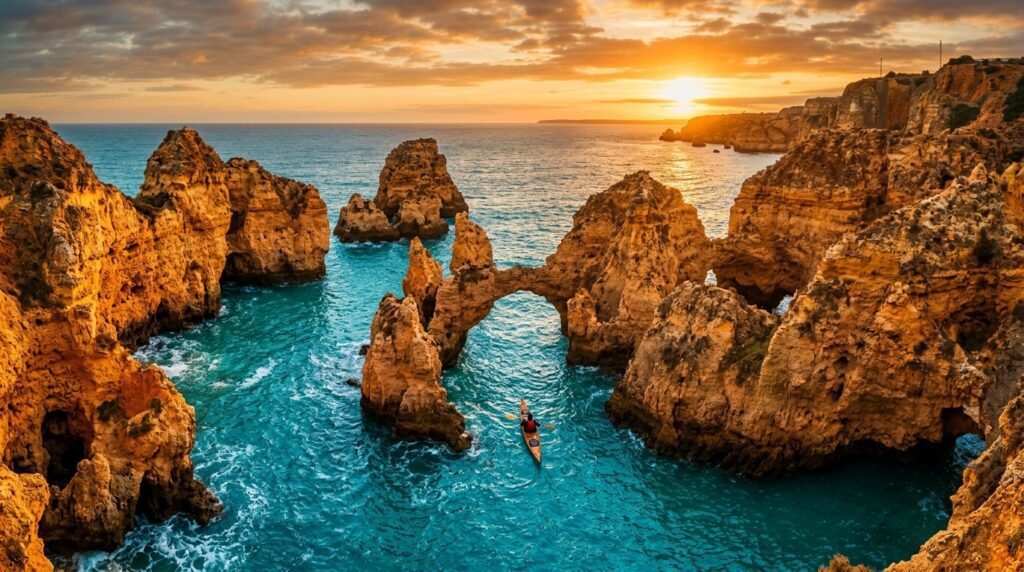
Start at Ponta de Piedade — a cluster of extraordinary golden limestone sea stacks and arches 3 kilometres south of Lagos town centre. Arrive by 9am before the tour boats crowd the water. The viewing platforms above the rocks are free; kayak and small boat tours departing from Lagos bring you through the sea caves and arches at water level, which is the right way to see them. Book the previous evening.
Spend the late morning and early afternoon at Meia Praia — a long, calm, sandy beach east of Lagos with safe swimming and enough space to find your own patch even in peak season. This is the beach day Portugal promised you.
Late afternoon: walk back through Lagos old town, buy something from the market, have a last pastel de nata, and sit somewhere with a view of the Atlantic. Then head to Faro Airport, 75 kilometres east, for your return flight.
Getting to Faro Airport from Lagos: Regional train from Lagos to Faro takes 1 hour 40 minutes (€8.10). Book your seat in advance and give yourself at least 2 hours before departure.
👉 Browse Algarve boat tours and sea cave kayak experiences on GetYourGuide →
Practical Information for Your 7-Day Trip
Getting Around Portugal
No car is needed for this itinerary. Everything works by train, metro, and Uber. The Alfa Pendular between Lisbon and Porto is comfortable, fast, and punctual — book at cp.pt at least a few days ahead to secure the best prices and preferred seats.
Within Lisbon, buy a Navegante card (€0.50) and load it for all metro, tram, and bus journeys. Within Porto, use an Andante card — same system, different name.
Where to Stay
- Lisbon: Príncipe Real or Chiado for elegant and central; Alfama for atmosphere; Belém for families
- Porto: Ribeira or Aliados for convenience; Bonfim for a local neighbourhood feel
- Algarve: Lagos old town for character and beach access; avoid the Albufeira resort strip on a first visit
Budget Guide (Per Person)
| Level | Daily Budget | What It Gets You |
|---|---|---|
| Budget | €60–80 | Hostel or guesthouse, local tascas, public transport |
| Mid-Range | €130–180 | 3–4 star hotel, sit-down meals, day trips |
| Comfortable | €200–280 | Boutique hotel, good restaurants, tours |
Best Time to Go
May, June, September, and October are ideal for a first visit — warm enough to swim, uncrowded enough to enjoy, and significantly cheaper than July and August. Sintra and the Algarve are both dramatically more pleasant in shoulder season.
Frequently Asked Questions — 7 Days in Portugal
Is 7 days enough to see Portugal properly? Seven days is enough for a genuinely satisfying first visit if you focus on two or three regions rather than attempting to cover the whole country. The Lisbon–Porto–Algarve corridor is the ideal route — it covers Portugal’s three most iconic destinations and connects easily by train and plane.
Do I need a car for a 7-day Portugal trip? No. This itinerary is designed entirely around public transport and works smoothly without a rental car. Trains connect Lisbon and Porto in under 3 hours; flights connect Porto to Faro in 1 hour. Within cities, metro, trams, and Uber handle everything.
How much does a week in Portugal cost? Budget approximately €60–80 per person per day for a comfortable mid-budget trip covering accommodation, meals, transport, and entry fees. A week for two people, including flights from the US, typically costs $3,000–5,000 depending on season and accommodation choices.
What is the best month to visit Portugal for the first time? May and September are the best months for a first visit — warm weather, calm seas, uncrowded attractions, and lower prices than peak summer. June is also excellent. July and August are busy and expensive but still wonderful if you book well in advance.
Should I fly into Lisbon or Porto? Fly into Lisbon and out of Faro if your itinerary follows this guide — it’s the most logical routing and avoids retracing your steps. If you want to start in Porto, fly into Porto and arrange your return from Lisbon or Faro.
Can I add the Alentejo or Madeira to a 7-day itinerary? The Alentejo wine country and Madeira island both deserve their own separate trips — adding either to a 7-day first visit means something else gets shortchanged. Save them for a return visit, which Portugal almost always inspires.
Build Your Own Portugal Itinerary
Want a personalised day-by-day plan built around your travel dates, group size, and occasion? Our AI travel planner does exactly that — in minutes.
Explore each destination in depth:
- Lisbon Travel Guide 2026 →
- Porto Travel Guide 2026 →
- Sintra Day Trip from Lisbon →
- Algarve Travel Guide 2026 →
- Is Portugal Safe to Visit in 2026? →
Last updated: June 2026. Train prices and journey times sourced from CP-Comboios de Portugal (cp.pt). Flight times and prices indicative for 2026 season. Always check current schedules before travel.